Linfor Inc. Launches New Website: A Legacy of Excellence in Hydraulic Tube Assemblies
When an OEM design or manufacturing engineer begins a project that calls for tubular structural components, the first question usually involves material selection. Hollow structural section tubing (commonly referred to as HSS) frequently rises to the top of the list. But selecting the right tube profile is only the beginning. The real work starts when you turn that tube into a finished component or assembly and that is where fabrication decisions directly affect strength, dimensional accuracy, appearance and production cost.
What Is HSS Tube?
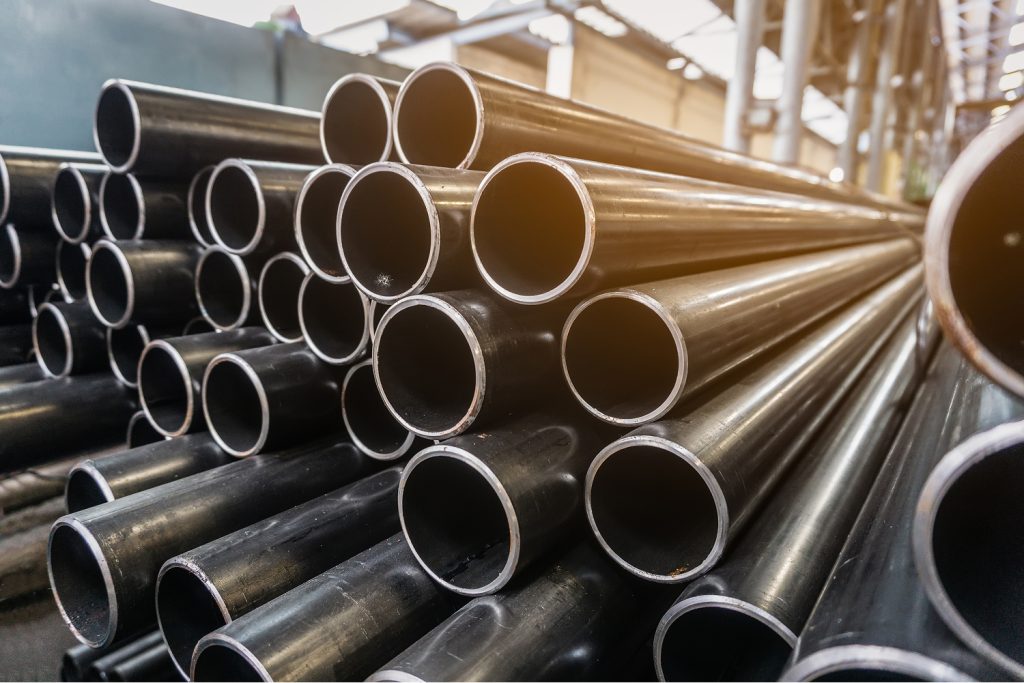
HSS stands for hollow structural section tubing. The term describes a structural tube form rather than one specific grade or alloy and it commonly comes in round, square and rectangular profiles. HSS differs from pipe, which is identified by nominal pipe size and generally intended for pressure or fluid transport. It also differs from mechanical tubing, which is specified primarily for dimensional or application requirements and from hydraulic tubing, which is designed specifically for fluid-power applications and pressure performance. Not all hollow tubing works interchangeably, so understanding these distinctions matters when specifying material for structural components.
Why OEMs Use HSS Tubing
HSS offers a lot of design characteristics that make it useful for structural and mechanical components. The hollow construction reduces weight compared with solid sections while maintaining favorable strength-to-weight performance. The material resists bending and torsional loads well and consistent shapes support repeatable fabrication. The clean exterior surfaces work well for visible assemblies and the tubing integrates into welded frames, supports and equipment structures. Performance depends on the profile, dimensions, wall thickness, grade, loading and finished design, so engineers evaluate these factors carefully.
Common OEM Applications
HSS tubing shows up across a wide range of OEM applications. Equipment frames, engine and equipment mounts, handles and railings, protective structures, machine supports, brackets and crossmembers, material-handling equipment and agricultural and construction equipment components all frequently use structural tubular assemblies. Many of these applications involve complex tubular assemblies with multiple bends, connections and attachment points.
Selecting the Correct HSS Profile
Engineers evaluating HSS for a structural component need to consider several factors. The profile choice (round, square or rectangular) affects both performance and manufacturability. Outside dimensions, wall thickness, component length and required strength and stiffness all factor into the selection. Expected bending or torsional loads, weight targets, weld-joint design and corrosion exposure also matter. Appearance requirements, required coatings or finishes and production quantities influence the final decision. The profile selection affects not only component performance but also how easily the fabricator can produce the part.
Material and Specification Considerations
Material specifications play a major role in HSS component performance. Engineers evaluate material grade, yield and tensile requirements, chemistry and weldability when selecting tubing. Dimensional tolerances, corner radii for square and rectangular sections and surface condition all affect how the material behaves during fabrication. Traceability and documentation requirements matter for regulated industries and coating requirements may influence material selection.
ASTM A500 is commonly associated with cold-formed structural tubing, but we work with a range of materials depending on the application. We maintain an inventory of hydraulic tubing, 304 stainless steel and aluminized steel in round sizes from 3/16 inch through 3 inches and we evaluate each project individually to determine the most suitable material for the application.
Fabrication Challenges With HSS Tube
This is where the rubber meets the road. Fabricating HSS into finished components brings a set of challenges that engineers need to anticipate during the design phase. Maintaining dimensional accuracy during cutting requires proper equipment and fixturing and controlling deformation during bending depends on the bend radius, wall thickness and material properties. Corner geometry in square or rectangular tubing presents particular challenges. Tight bends can lead to cracking, which may not become visible until welding or heat exposure occurs.
Preventing tube collapse, wrinkling or excessive ovality during bending requires careful process control. Holding hole and feature locations across multiple bends demands accurate setup and consistent material. Planning weld sequences to reduce distortion matters, especially for assemblies with multiple welds. Achieving strong, consistent joints requires proper weld procedure, joint preparation and operator skill. Maintaining alignment between multiple tubular components across a production run means designing and using appropriate fixtures.
Preparing ends for fittings, brackets or mating components may involve cutting, notching or end-forming operations. Accounting for springback in bending ensures the finished part matches the drawing. Designing fixtures and inspection methods for repeatable production helps maintain quality across the run. Not every HSS profile can be bent with the same equipment or process, so we evaluate each project individually.
Designing HSS Components for Manufacturability
Engineers can take several steps to make their HSS components easier to fabricate. Using realistic bend radii avoids unnecessary difficulty and cost. Avoiding holes or attachments too close to bends prevents distortion and maintains strength. Identifying critical dimensions and datums clearly helps the fabricator understand what matters most. Specifying tolerances based on function rather than arbitrary standards keeps costs under control.
Considering tool access and weld access during the design phase prevents problems on the shop floor. Minimizing unnecessary secondary operations reduces cost and lead time while standardizing tube sizes where practical simplifies material procurement and inventory. Planning for coatings and finishing before finalizing clearances avoids clearance issues later. Involving us before freezing the design can uncover potential problems early when changes cost less. We work closely with customers to improve designs to reduce material and labor requirements with collaborative engineering.
From Prototype to Production
Prototyping plays an essential role in verifying HSS component designs. Fit and installation can be confirmed with physical parts before committing to tooling. Bend geometry and hole locations can be checked against the model. Weld-joint access can be evaluated with actual parts rather than drawings. Assembly alignment can be verified and tooling and fixture requirements can be developed. Inspection procedures can be established and production cycle time can be estimated.
We use design software and a fully equipped machine shop to produce functional tube prototypes, refine designs and transition approved components into production. This approach helps customers verify fit, function and manufacturability before moving to volume production.
Choosing an HSS Tube Fabrication Partner
Selecting the right fabricator for HSS components involves evaluating several capabilities. Relevant profile and size capabilities matter, but CNC tube bending capacity is equally important. Cutting and preparation equipment, welding and brazing expertise and end-forming capabilities all factor into the decision. Prototype support and production scalability help ensure smooth transitions from development to volume production.
Quality-management systems, inspection capabilities and design collaboration all distinguish a full-service fabricator from a company that only sells raw tubing. Experience with complex tubular assemblies provides confidence that challenging projects can be completed successfully.
We have been providing custom tube fabrication since 1962. We work with OEMs in agriculture, construction, turf and industrial equipment, offering design and prototyping collaboration, automated cutting and deburring, CNC tube bending, MIG and TIG welding, socket and butt welding, induction and gas-air rotary brazing, custom end forming and fitting attachment and an ISO 9001:2015-certified quality management system. We maintain a range of materials and sizes and support projects from functional prototypes through full-scale production.
Developing an HSS or structural tube component? Contact Linfor today to discuss your tube profile, dimensions, bend geometry, joining requirements and production timeline.